
Overview
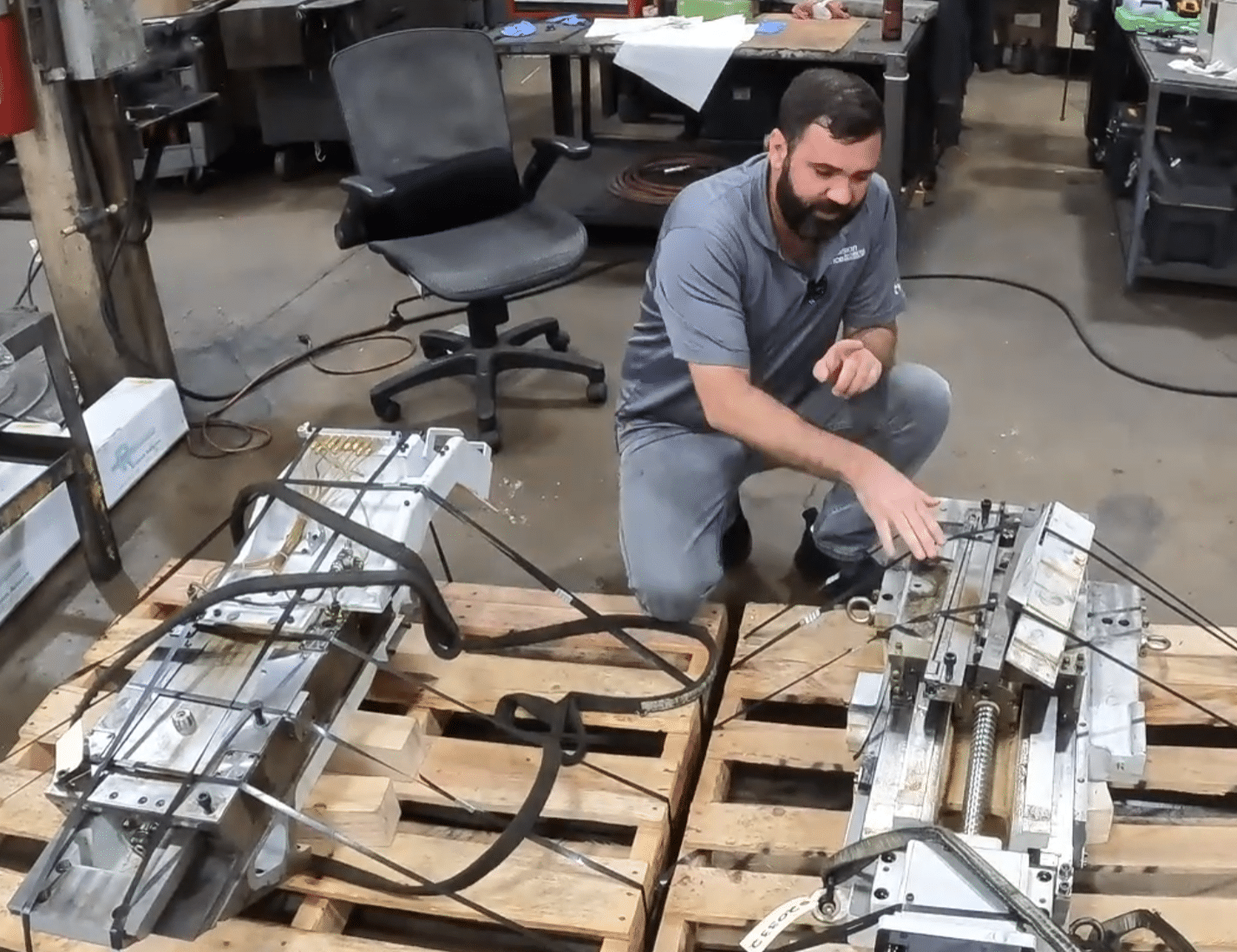
A customer came to us with an Okuma LB3000 experiencing increasing friction, chatter, and drifting geometry in the X-axis slide. Accuracy had declined, surface finishes were inconsistent, and the machine required continual adjustment to maintain tolerance. Rather than investing in a costly replacement slide or new machine, the customer asked Precision Service Machine Tool Rebuilders to restore the assembly to peak performance.
We executed a complete rebuild—teardown, straightening, way grinding, hand scraping, alignment, lubrication renewal, and final geometric verification. When finished, the LB3000 regained smooth, stable travel with greatly improved accuracy and repeatability, all delivered at a fraction of replacement cost.
Project Background & Objectives
The Okuma LB3000 is designed for heavy, precision turning, making slide accuracy critical to part quality. When this customer contacted us, their machine was showing:
These symptoms directly impaired cycle efficiency, part accuracy, and operational reliability. Lead times and costs for replacement components would have been significant. A professional rebuild was the fastest, most economical path forward.
The customer’s primary goals were clear:
They chose us based on our specialized experience with large-frame turning-center slide rebuilds and our reputation for precision grinding and expert scraping.
Our Rebuild Process
- Complete Disassembly & Condition Assessment
- Cleaning, Preparation & Fixturing
- Precision Way Grinding & Alignment Correction
- Hand Scraping for Contact, Geometry & Oil Retention
- Lubrication System Renewal
- Reassembly, Alignment & Final Verification
We began by fully disassembling the LB3000’s slide assembly to understand the extent of wear. Our inspection included:
- removal of sheet metal, covers, gibs, lubrication hardware, and seals
- careful evaluation of guideways for scoring and galling
- measurement of straightness, flatness, and parallelism
- evaluation of lubrication pathways for blockages
- documenting all mechanical, geometric, and wear-related issues
This allowed us to define a precise rebuild plan tailored to the machine’s condition.
To ensure accuracy, we thoroughly prepared the slide for machining and scraping:
- degreasing and cleaning surfaces down to bare metal
- flushing and clearing all oil passages
- preparing way surfaces for grinding
- fixturing the assembly to maintain stability during restoration
Proper preparation is essential to maintaining geometric accuracy during the rebuild.
Using controlled grinding methods, we restored foundational geometry to the slide. This step included:
- correcting worn bearing surfaces
- restoring consistent height and flatness
- re-establishing parallelism across the slide/base relationship
- removing taper, bow, and localized wear pockets
Precision grinding gives us an accurate baseline for the extensive scraping work that follows.
Our scraping specialists then brought the slide to its final precision state. This phase is where we reintroduced the performance that modern turning centers demand. Scraping work included:
- achieving proper bearing contact percentage across the entire travel
- correcting remaining geometric deviations
- improving load distribution to reduce future wear
- creating cross-hatch patterns and oil pockets for reliable lubrication
- eliminating stick–slip behavior to achieve smooth, consistent motion
This level of hand scraping is one of our core specialties and is crucial to long-term machine accuracy.
We traced lubrication inconsistencies back to partially obstructed passages and degraded fittings. To ensure long-term performance, we:
- cleared and reshaped all lubrication pathways
- cleaned and restored oil-retention pockets
- inspected and replaced metering units and fittings where needed
- verified uniform lubrication delivery across all bearing surfaces
A properly functioning lubrication system prevents many wear issues from returning.
Once the surfaces and lubrication system were fully restored, we reassembled the slide and completed alignment and testing:
- reinstalling all hardware, seals, and lubrication components
- aligning the slide to the base casting
- verifying straightness, squareness, and geometric relationships
- checking contact patterns along the full travel
- conducting push/pull force tests to confirm smooth motion
- validating performance under simulated machining loads
The final results showed significant improvement in accuracy, stability, and motion consistency compared to pre-rebuild condition.
Value We Delivered
Conclusion
From teardown to final alignment, we restored the Okuma LB3000’s slide to a smooth, accurate, and reliable operating condition. Our rebuild returned the machine to high-precision performance and gave the customer a cost-effective alternative to major equipment replacement.
For operators experiencing motion issues, alignment drift, chatter, or declining accuracy, our slide rebuilds offer a proven way to restore performance and protect long-term productivity.
Disclaimer
This case study is provided for informational purposes only. Each machine has its own conditions and variables. Actual results may vary. Always consult qualified professionals when making equipment decisions. To learn more about this project, view a breakdown on our YouTube Channel.