
Overview
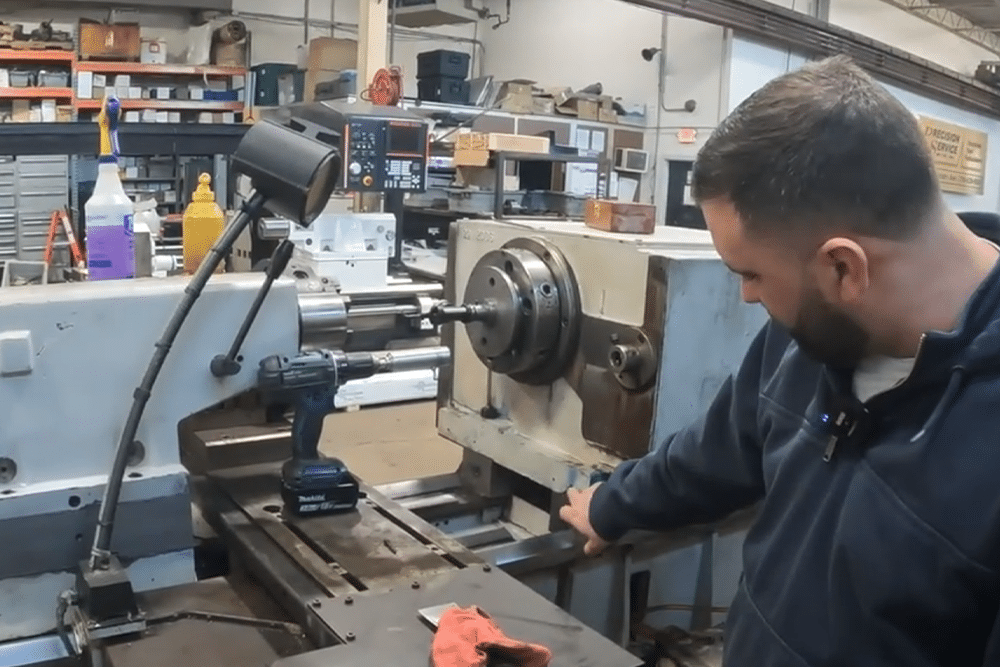
A customer came to Precision Service Machine Tool Rebuilders with an older lathe that needed to be modified to provide additional swing capacity. Rather than replacing the machine, the customer wanted to improve the usability of existing equipment by raising the headstock and realigning the machine.
This type of upgrade requires more than simply lifting one component. The headstock controls the spindle centerline, which directly affects the relationship between the workpiece, tooling, carriage, tailstock, and bed ways. If the modification is not completed carefully, the machine can lose accuracy, create alignment issues, or become difficult to use reliably.
Our team raised the headstock, evaluated the machine geometry, and realigned the lathe so the upgraded machine could continue supporting the customer’s work. The project demonstrated Precision Service Machine Tool Rebuilders’ ability to combine practical machine modification with precision alignment experience.
Project Background & Objectives
Older lathes often remain valuable because of their heavy construction, durability, and usefulness in repair, tooling, and production environments. However, some older machines may not have the swing capacity needed for larger workpieces. In this case, the customer wanted to increase the machine’s useful range without moving immediately to a replacement lathe.
The main objectives of this project were to:
Because the headstock is one of the most important reference points on a lathe, this project required careful planning and experienced machine tool knowledge.
Rebuild & Upgrade Process
- Initial Machine Evaluation
- Headstock Raising
- Checking Machine Geometry
- Machine Realignment
- Final Review & Customer Guidance
Precision Service Machine Tool Rebuilders began by reviewing the condition of the older lathe and understanding the customer’s goal for the upgrade. The key challenge was increasing the machine’s swing while maintaining proper alignment and function.
On a lathe, the headstock is not an isolated component. Its position affects spindle height, centerline geometry, carriage travel, tooling position, and the relationship between the headstock and tailstock. Before making the modification, our team evaluated how raising the headstock would affect the rest of the machine.
The headstock was raised to create additional clearance for larger workpieces. This step required careful handling because even small changes in headstock position can affect turning accuracy and machine performance.
The goal was not only to increase swing, but to complete the upgrade in a way that allowed the machine to remain useful, stable, and serviceable. Our team approached the work as a precision machine modification, not a quick alteration.
After the headstock was raised, the next critical step was reviewing the machine’s geometry. When the spindle centerline changes, the alignment relationship between major machine components must be checked.
This included evaluating how the raised headstock related to:
- The lathe bed
- The carriage and tooling path
- The tailstock centerline
- The machine’s overall alignment
- The usable working envelope of the lathe
This stage helped determine what adjustments were needed so the machine could operate properly after the upgrade.
Once the headstock was raised and the machine geometry was reviewed, Precision Service Machine Tool Rebuilders realigned the lathe. This step was essential because the modification changed the machine’s original setup and required the major components to be brought back into proper working relationship.
Proper realignment helps reduce the risk of:
- Taper during turning operations
- Poor workpiece support
- Inconsistent part quality
- Tooling position problems
- Misalignment between the headstock and tailstock
- Reduced repeatability
By realigning the machine after the upgrade, our team helped ensure the lathe could provide practical value after the modification was complete.
After the upgrade and realignment work was completed, Precision Service Machine Tool Rebuilders reviewed the machine as a complete system. This helped confirm that the headstock raise served the customer’s goal while keeping the machine usable for future work.
Our team also provided the customer with practical insight into the machine’s condition and the considerations that come with modifying older equipment. This type of guidance is important because machine upgrades often affect more than one component, especially on older lathes where original geometry and wear patterns must be considered.
Value Delivered by PSMTR
Project Outcome
The completed upgrade gave the customer an older lathe with improved swing capacity and a realigned machine geometry. By raising the headstock and realigning the lathe, Precision Service Machine Tool Rebuilders helped the customer adapt existing equipment to better meet current machining needs.
The project also showed the importance of performing machine modifications in the proper sequence. When a major component like the headstock is changed, alignment must be addressed as part of the same project. Without that step, the machine may gain clearance but lose accuracy. PSMTR delivered both the mechanical upgrade and the precision alignment support needed to make the modification practical.
Conclusion
This old lathe upgrade highlights the value of working with an experienced machine tool rebuilder when existing equipment needs to be modified, repaired, or realigned. Precision Service Machine Tool Rebuilders helped the customer increase the machine’s swing capacity while addressing the alignment requirements created by raising the headstock.
For manufacturers working with older lathes, machine limitations do not always mean the equipment must be replaced. With the right inspection, modification, and alignment expertise, existing machines can often be adapted to support new production or repair needs.
Precision Service Machine Tool Rebuilders provides the hands-on experience and precision knowledge required to help customers extend the life, capability, and value of their machine tools.
Disclaimer
This case study is provided for informational purposes only. Machine condition, repair requirements, operating environment, modification feasibility, and performance outcomes vary by project. Actual results may differ. Always consult qualified machine tool rebuilding professionals before making equipment repair, rebuilding, or modification decisions.