
Landis

Landis Machine Tool Rebuilding & Repair
Landis threading equipment has been a cornerstone of high-volume threading for decades—both in modern CNC environments and in legacy bolt and pipe shops that still rely on heavy iron every day.
Our role is simple: help you get the most out of your Landis threading systems—whether you’re rolling high-strength fasteners or cutting pipe threads on older, mechanically driven machines.
Why Manufacturers Choose Landis Threading Solutions
Landis equipment is built for productivity, consistency, and long service life. Over time, even these robust systems face:
The focus with Landis threading systems is typically on:
Types of Landis Threading Systems in Use Today
We see two major groups of Landis solutions in the field: modern tooling systems and classic stand-alone machines.
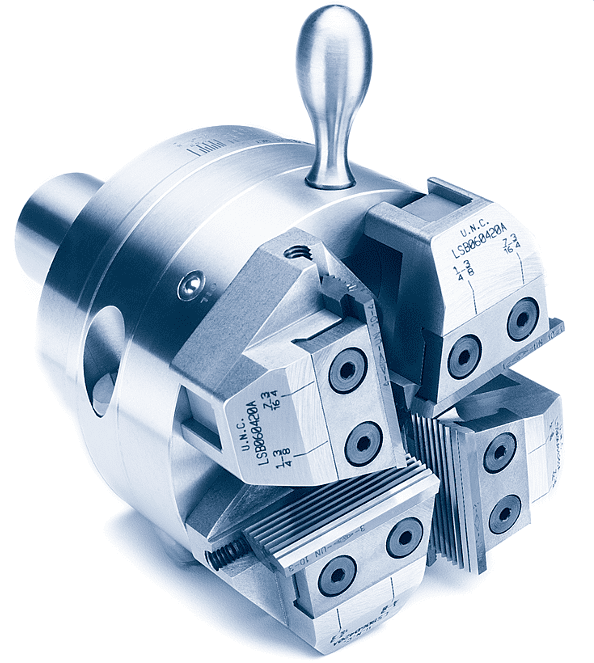
CNC Thread Rolling Systems
Compact, chipless thread rolling tools designed for CNC lathes and Swiss-type machines.
Stationary Thread Rolling Heads
Fixed thread rolling heads mounted to a machine while the workpiece rotates or feeds through.
Revolving Thread Rolling Heads
Rolling heads that rotate around the part, often on multi-spindle or automatic screw machines.
Stationary Thread Cutting (Die) Heads
Chip-forming die heads for external threads on bolts, studs, and pipe.
Revolving Thread Cutting (Die) Heads
Die heads that rotate, with the work held stationary or feeding linearly.
Classic Landis Threading Machines (Legacy but Common)
Bolt & Pipe Threading Machines
Heavy, floor-mounted machines built specifically for cutting bolt and pipe threads.
Double-End and Multi-Spindle Threaders
Mechanically driven machines that thread from both ends or run multiple spindles at once.
Dedicated Thread Rolling Machines
Stand-alone thread rolling machines for forming threads rather than cutting them.
What Shops Aim to Achieve With Landis Threading Equipment
Whether the equipment is modern or legacy, the goals are similar:
Across both modern tooling and older stand-alone machines, common issues include:
Keeping Your Landis Threading Systems Productive
When a Landis threader or threading head isn’t performing, it impacts scrap rates, throughput, and delivery reliability.
By understanding which category your equipment falls into—modern CNC threading tools, stationary or revolving heads, or classic bolt/pipe machines—you can make better decisions about tooling, upgrades, maintenance, and replacement.
Share what type of Landis threading system you’re working with (CNC tooling, heads, or stand-alone machine) and the issues you’re seeing, and this can be turned into a focused capability list, equipment plan, or website section that speaks directly to your customer base.