
Overview
A customer came to Precision Service Machine Tool Rebuilders with a gearbox that had experienced severe overheating after previous rebuild work. During inspection, our team found that the gearbox had become hot enough to damage the bearing assembly, including a broken bearing cage.
Because gearbox overheating can quickly lead to bearing failure, gear damage, shaft wear, lubricant breakdown, and unplanned downtime, the project required more than a basic repair. Our team performed a detailed teardown and failure analysis to identify the damaged components, evaluate the likely cause of the overheating, and determine the proper path forward for a reliable repair.
This project demonstrated the value of working with an experienced machine tool rebuilding team that understands how to inspect the full mechanical system, not just replace the visibly damaged parts.
Project Background & Objectives
Industrial gearboxes are critical to machine performance. When a gearbox begins overheating, it can affect the entire drive system and create serious operational risks, including:
For this project, the customer needed Precision Service Machine Tool Rebuilders to inspect the gearbox, identify the source of the failure, and provide a repair approach that addressed both the damaged components and the underlying overheating concern.
The main objectives were to:
Our Rebuild Process
- Initial Gearbox Inspection
- Teardown & Failure Analysis
- Inspection of Related Components
- Cleaning & Component Preparation
- Bearing Replacement & Corrective Repair
- Reassembly & Operational Review
Precision Service Machine Tool Rebuilders began with a careful inspection of the gearbox to evaluate the condition of the unit and determine how the overheating had affected internal components.
Because the gearbox had become extremely hot, our team focused on more than the obvious bearing damage. Excessive heat can affect bearing fits, shaft journals, seals, lubricant condition, gear contact patterns, and housing integrity. A proper repair required a complete understanding of what failed and what additional components may have been stressed during operation.
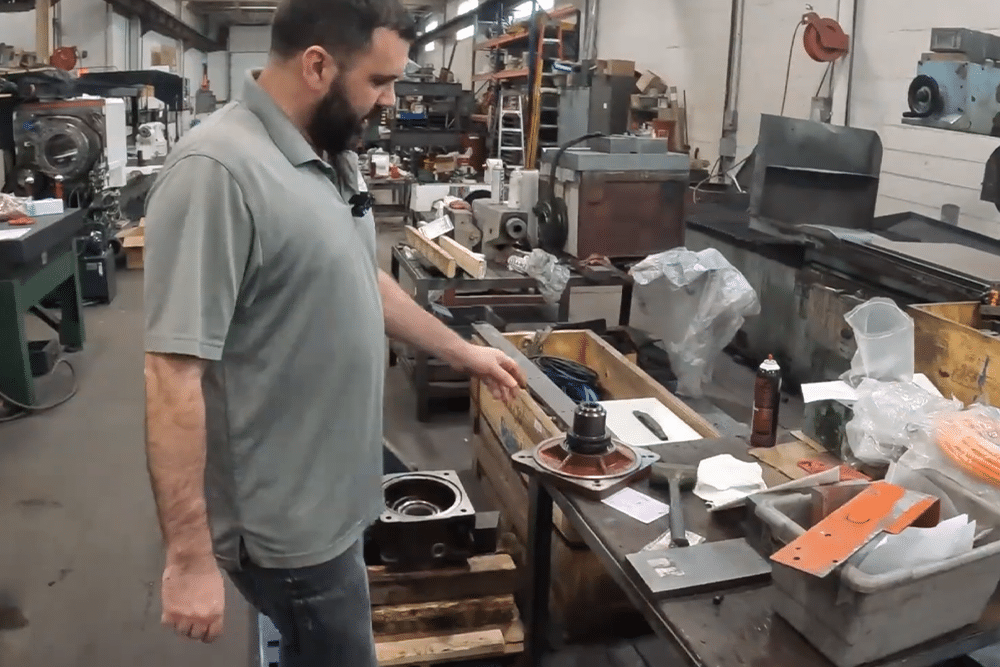
After the initial review, the gearbox was disassembled so our team could inspect the internal components. During teardown, the failed bearing assembly was evaluated closely, including the damaged bearing cage.
Bearing cage failure is a serious warning sign. When the cage breaks, the rolling elements can lose proper spacing and control, which may lead to additional friction, heat, vibration, and damage throughout the gearbox. Our team examined the failure area to determine whether the issue was isolated to the bearing or whether it had affected the surrounding gearbox components.
This analysis helped identify potential contributing factors such as:
- Improper loading or operating conditions
- Excessive operating temperature
- Bearing wear or breakdown
- Lubrication concerns
- Contamination from failed bearing material
- Shaft or housing fit issues
- Gearbox alignment concerns
Once the bearing failure was identified, Precision Service Machine Tool Rebuilders inspected the rest of the gearbox assembly. This step is critical because a failed bearing can send debris through the unit and place added stress on gears, shafts, seals, and housing surfaces.
Our inspection included reviewing:
- Bearing seats and fits
- Shaft journals
- Gear condition
- Seals and sealing surfaces
- Housing bores
- Internal wear patterns
- Signs of heat-related damage
- Evidence of lubricant breakdown or contamination
By evaluating the full assembly, our team helped ensure that the repair addressed the complete condition of the gearbox rather than only replacing the failed bearing.
After disassembly and inspection, the gearbox components were cleaned and prepared for repair. Removing debris, old lubricant, and contamination is an important part of any gearbox rebuild, especially after a bearing failure.
Metal particles from a damaged bearing can continue to circulate through a gearbox if not properly removed. This can damage new bearings, accelerate gear wear, and create another failure after the unit is returned to service. Our team cleaned the internal components and prepared the gearbox for the corrective work required.
The damaged bearing assembly was addressed as part of the repair process. Precision Service Machine Tool Rebuilders focused on restoring proper bearing support and helping the gearbox operate with reduced friction, improved stability, and better long-term reliability.
Depending on the condition of the related components, corrective repair may include:
- Replacing failed bearings
- Inspecting and correcting bearing fits
- Repairing or evaluating shaft journals
- Checking gear condition and contact
- Replacing seals
- Cleaning or clearing lubrication pathways
- Verifying proper assembly conditions
- Preparing the gearbox for reinstallation and operation
The goal was not only to restore the gearbox mechanically, but also to reduce the risk of the same overheating issue returning.
After the required repair work was completed, the gearbox was reassembled with attention to fit, alignment, cleanliness, and component condition. Proper reassembly is especially important in a gearbox that has experienced overheating because even small issues can lead to premature bearing wear or elevated operating temperatures.
Precision Service Machine Tool Rebuilders reviewed the completed repair and provided practical insight into what was found, what was corrected, and what should be monitored after the gearbox returns to operation.
Value Delivered by PSMTR
Project Outcome
The gearbox repair and analysis gave the customer a clearer understanding of the bearing failure and the overheating condition that contributed to the problem. By disassembling the unit, identifying the damaged bearing cage, inspecting related components, and addressing the necessary repair work, Precision Service Machine Tool Rebuilders helped move the gearbox toward reliable operation.
The project also reinforced the importance of acting quickly when a gearbox begins running hot. Excessive heat can cause bearing failure, damage internal components, and lead to costly downtime if left unresolved.
Conclusion
This gearbox repair project highlights the value of professional inspection, teardown, and failure analysis when industrial equipment begins overheating. A failed bearing cage is not just a worn part. It is a sign that the gearbox experienced a serious mechanical or thermal issue that needs to be fully understood before the unit returns to service.
Precision Service Machine Tool Rebuilders provided the inspection, repair expertise, and practical rebuild approach needed to help the customer address the failure with confidence.
For manufacturers dealing with gearbox overheating, bearing failure, abnormal noise, vibration, lubricant issues, or recurring drive system problems, professional gearbox repair can help protect production equipment, reduce downtime, and extend the useful life of critical machinery.
Disclaimer
This case study is provided for informational purposes only. Machine condition, repair requirements, operating environment, and performance outcomes vary by project. Actual results may differ. Always consult qualified machine tool rebuilding professionals before making equipment repair or replacement decisions.