
Overview
A manufacturing operation relied on Precision Service Machine Tool Rebuilders to inspect and repair the apron on a Poreba lathe after coolant contamination was discovered inside the machine’s apron assembly. Because the apron contains critical feed, gearing, clutching, and lubrication components, coolant intrusion can create serious long-term problems if it is not properly diagnosed and corrected.
Our team inspected the apron, identified signs of coolant contamination, and evaluated the internal components to determine the extent of the issue. Rather than treating the repair as a simple cleaning job, Precision Service Machine Tool Rebuilders focused on understanding how the contamination affected the machine and what needed to be addressed to prevent further damage.
This project demonstrated the importance of experienced machine tool inspection. Coolant inside an apron can dilute lubrication, accelerate corrosion, damage bearings and gears, and lead to unreliable machine movement. By identifying the problem early and approaching the repair methodically, PSMTR helped the customer protect the long-term value and performance of their Poreba lathe.
Project Background & Objectives
Poreba lathes are heavy-duty machines often used for demanding turning applications. The apron plays a central role in machine operation because it houses the mechanisms that control carriage movement, feed engagement, and other operating functions. When coolant enters the apron, it can compromise the oil and lubrication system that these components depend on.
For this project, the customer needed Precision Service Machine Tool Rebuilders to inspect the apron and determine why coolant contamination was present. The main objectives were to:
- Support reliable operation of the Poreba lathe moving forward
- Identify the source and severity of coolant contamination
- Inspect the internal apron components for damage or wear
- Determine whether the contaminated oil had affected gears, shafts, bearings, or feed mechanisms
- Clean and prepare the apron for proper repair
- Address sealing, leakage, and contamination concerns where applicable
- Help prevent repeat contamination after the machine returned to service
Rebuild Process
- Initial Apron Inspection
- Identification of Coolant Contamination
- Apron Disassembly & Internal Evaluation
- Cleaning & Contamination Removal
- Sealing & Failure-Point Review
- Repair Planning & Component Protection
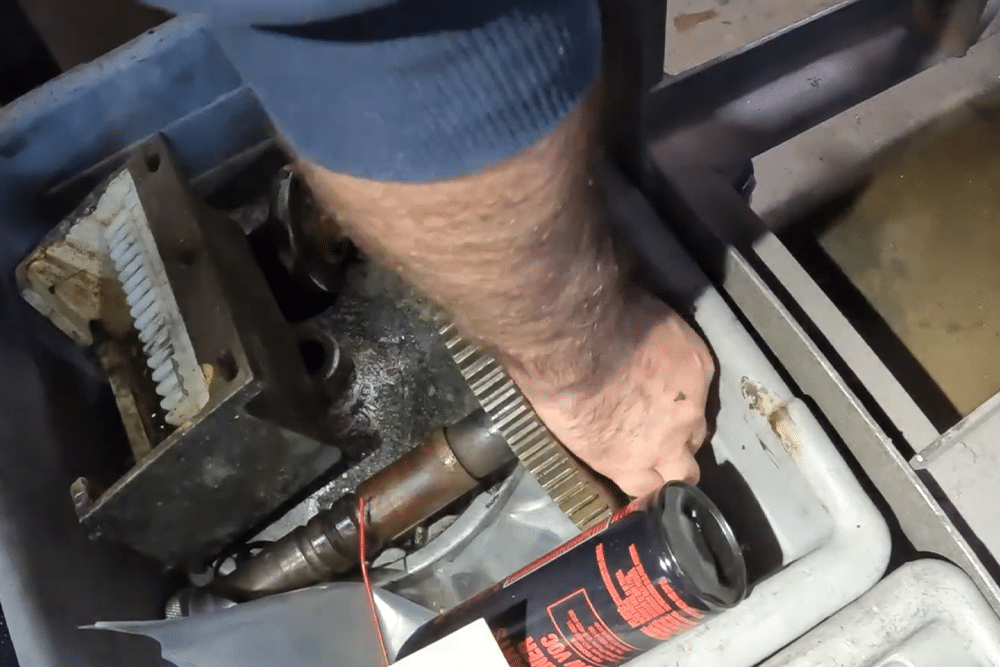
Precision Service Machine Tool Rebuilders began by evaluating the condition of the Poreba apron and reviewing the visible signs of contamination. Coolant intrusion is a serious concern because the apron is designed to operate with proper lubrication, not a mixture of oil and coolant.
When coolant enters the apron, it can create a milky or diluted oil condition, reduce lubrication performance, and expose internal components to corrosion. Our inspection focused on determining how much contamination was present and whether the issue was isolated or part of a larger machine condition.
The key finding during this project was the presence of coolant contamination within the apron assembly. This indicated that coolant had found a path into an area of the machine that should remain protected and lubricated.
This type of issue can create several problems, including:
- Loss of proper lubrication
- Rust or corrosion on internal components
- Premature bearing and bushing wear
- Gear damage or accelerated wear
- Sticky or unreliable feed engagement
- Damage to seals, gaskets, or mating surfaces
- Increased risk of future apron failure
By identifying coolant contamination as a core issue, PSMTR was able to focus the repair on both the visible symptom and the underlying risk to the machine.
After the initial inspection, the apron was opened and evaluated to better understand the condition of the internal components. This step is critical because coolant contamination can affect parts that may not show immediate external symptoms.
Our team inspected the apron’s internal systems, including the gears, shafts, lubrication paths, bearings, bushings, and related mechanical components. The goal was to determine what could be cleaned, what needed correction, and whether any areas showed signs of damage caused by contaminated lubrication.
This evaluation allowed PSMTR to separate routine contamination cleanup from repair work that could affect long-term machine performance.
Once the contamination was confirmed, the apron components needed to be cleaned and prepared for continued repair. Removing coolant-contaminated oil is an important part of the process, but it is only one step.
The affected areas had to be cleaned carefully so that internal parts could be properly inspected. This helped expose wear patterns, corrosion, and any component conditions that may have been hidden by the contaminated fluid.
Proper cleaning also helps ensure that the apron can be reassembled with a reliable lubrication environment rather than carrying residual contamination back into service.
A major part of this project was determining how coolant was able to enter the apron in the first place. On older or heavily used machine tools, contamination can occur through worn seals, compromised gaskets, damaged covers, poor drainage, or other access points where coolant can migrate into the apron housing.
Precision Service Machine Tool Rebuilders reviewed the apron and surrounding machine conditions to identify areas that could allow coolant intrusion. This step is what separates a temporary repair from a more complete machine tool solution.
Instead of simply draining and refilling the apron, PSMTR focused on helping reduce the likelihood of repeat contamination.
After the apron was cleaned and evaluated, our team determined the appropriate repair path based on the condition of the internal components. In machine tool repair, this step is especially important because replacing parts unnecessarily can increase cost, while overlooking contaminated or damaged parts can lead to future downtime.
The repair planning process considered:
- Which components remained serviceable
- Which areas showed signs of wear or corrosion
- Whether lubrication pathways were compromised
- Whether sealing improvements were needed
- How the apron should be protected before returning to operation
This gave the customer a clearer understanding of the condition of the apron and the work needed to restore dependable performance.
Value Delivered by PSMTR
Project Outcome
The Poreba apron repair helped the customer better understand the source and impact of coolant contamination within the machine. Precision Service Machine Tool Rebuilders identified the issue, evaluated the internal apron components, cleaned the affected areas, and helped determine the appropriate repair path.
By addressing the contamination early, the customer reduced the risk of continued internal damage, unreliable feed operation, and more extensive future repairs. The project reinforced the importance of professional machine tool inspection when coolant, oil, or lubrication issues begin affecting critical mechanical assemblies.
Conclusion
This Poreba apron repair project highlights the value of working with an experienced machine tool rebuilder when contamination issues appear inside critical machine components. Coolant intrusion can quickly affect lubrication, internal wear, and operational reliability if it is not properly diagnosed.
Precision Service Machine Tool Rebuilders provided the inspection, troubleshooting, repair planning, and machine tool expertise needed to address the problem correctly. For manufacturers dealing with apron issues, coolant contamination, feed problems, or unexplained machine wear, professional evaluation can help prevent small problems from becoming major failures.
By identifying the coolant contamination issue and evaluating the apron as a complete mechanical system, PSMTR helped the customer protect their equipment investment and extend the useful life of their Poreba lathe.
Disclaimer
This case study is provided for informational purposes only. Machine condition, repair requirements, operating environment, and performance outcomes vary by project. Actual results may differ. Always consult qualified machine tool rebuilding professionals before making equipment repair or replacement decisions.