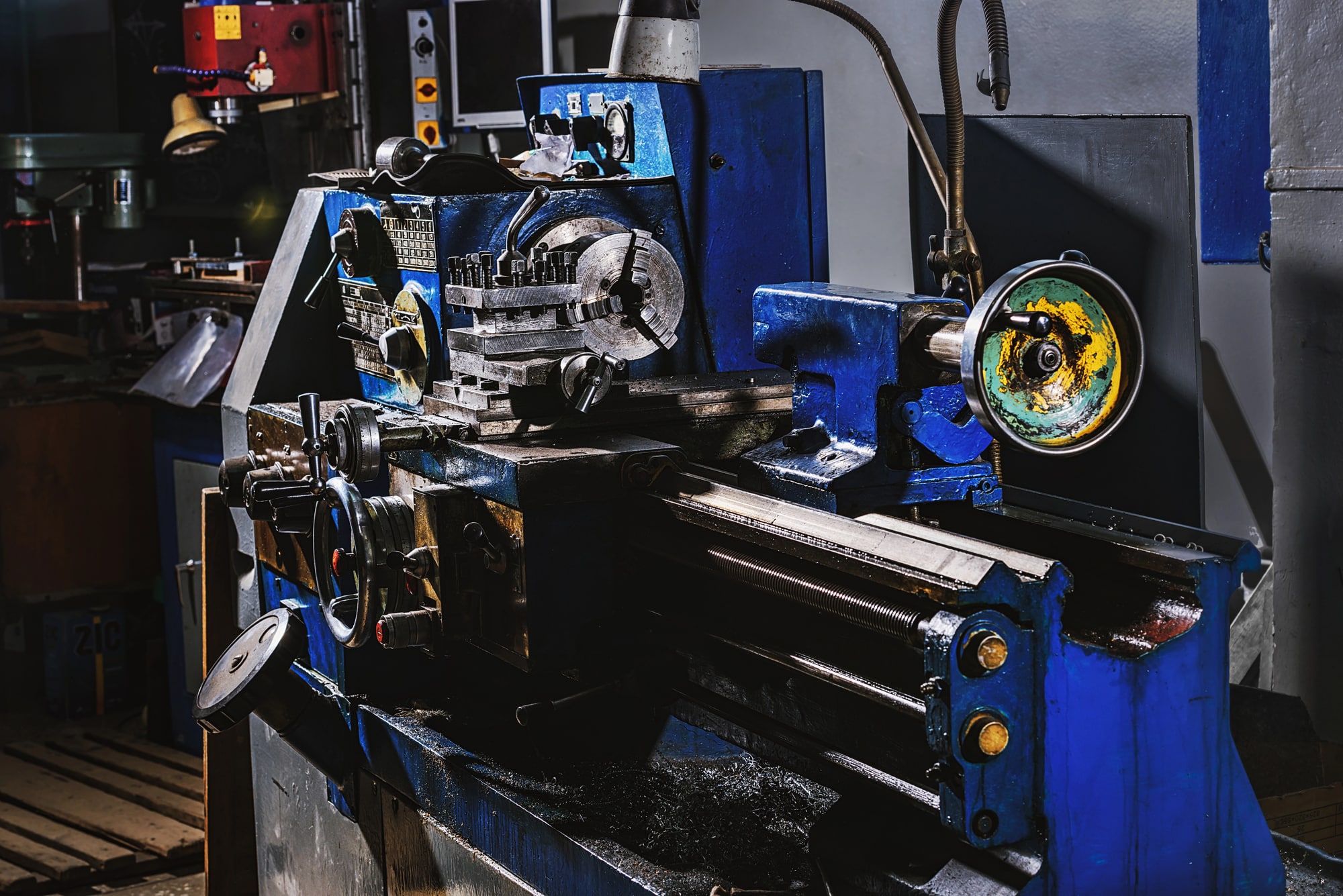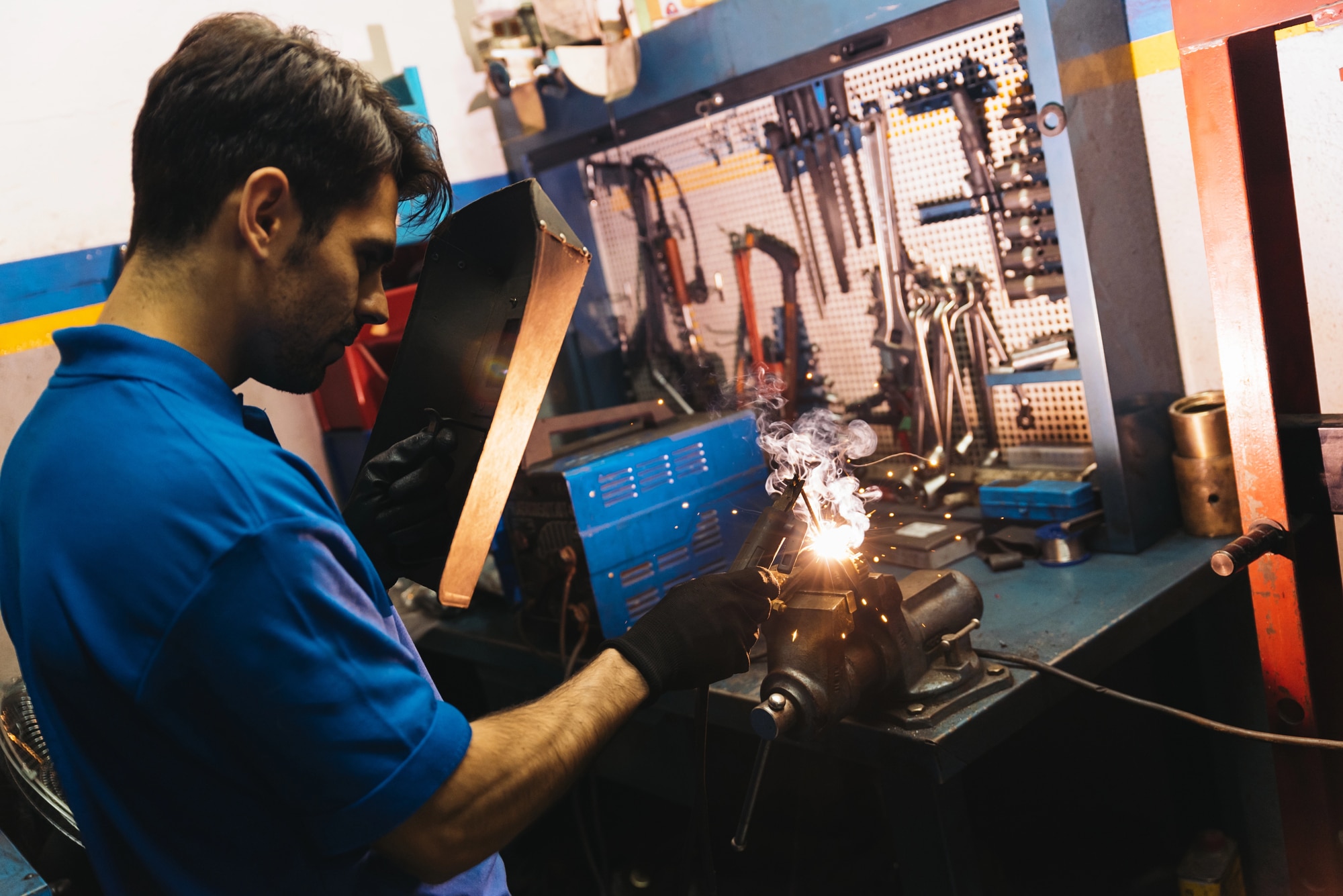

Restoring machine accuracy often requires more than one process. Hand scraping, precision slideway grinding, and laser alignment each play a different role, but together they can bring worn machine tools back into proper mechanical relationship.
For manufacturers dealing with taper, chatter, poor finishes, lost geometry, or inconsistent part quality, understanding these services can help clarify what kind of restoration may be needed.
What Slideway Grinding Does
Precision surface and slideway grinding restores worn or damaged surfaces. On machine tools, this may include bedways, saddle ways, table surfaces, columns, rams, cross-slides, or other mating components.
Grinding is often used to correct flatness, straightness, squareness, twist, and other geometric errors. It is especially important when surfaces are too worn or uneven for simple adjustment.
What Hand Scraping Does
Hand scraping is a skilled process used to refine bearing surfaces and restore proper contact between machine components. While grinding can restore broad geometry, scraping helps establish the final fit, oil retention, and bearing contact needed for smooth and accurate motion.
This process is often used on ways, slides, gibs, saddles, and other precision surfaces where controlled contact is essential.
What Laser Alignment Does
Laser alignment verifies and corrects machine geometry. It can be used to measure straightness, squareness, level, axis relationships, positioning accuracy, and other alignment factors.
Laser alignment is valuable after major service, relocation, foundation changes, component replacement, or when a machine is producing parts that suggest geometric error.
Why These Services Are Often Connected
A machine may need grinding to restore the surface, scraping to refine the fit, and laser alignment to verify the final geometry. Skipping one step can limit the value of the others.
For example, aligning a machine with badly worn ways may not solve the underlying problem. Likewise, grinding surfaces without proper fitting and final alignment may not produce the accuracy the machine needs.
The Goal Is Restored Geometry
At Precision Service Machine Tool Rebuilders, these processes are part of a larger goal: restoring the machine’s ability to cut, turn, grind, or position accurately. When the geometry is right, operators can trust the machine, parts become more consistent, and production becomes easier to control.