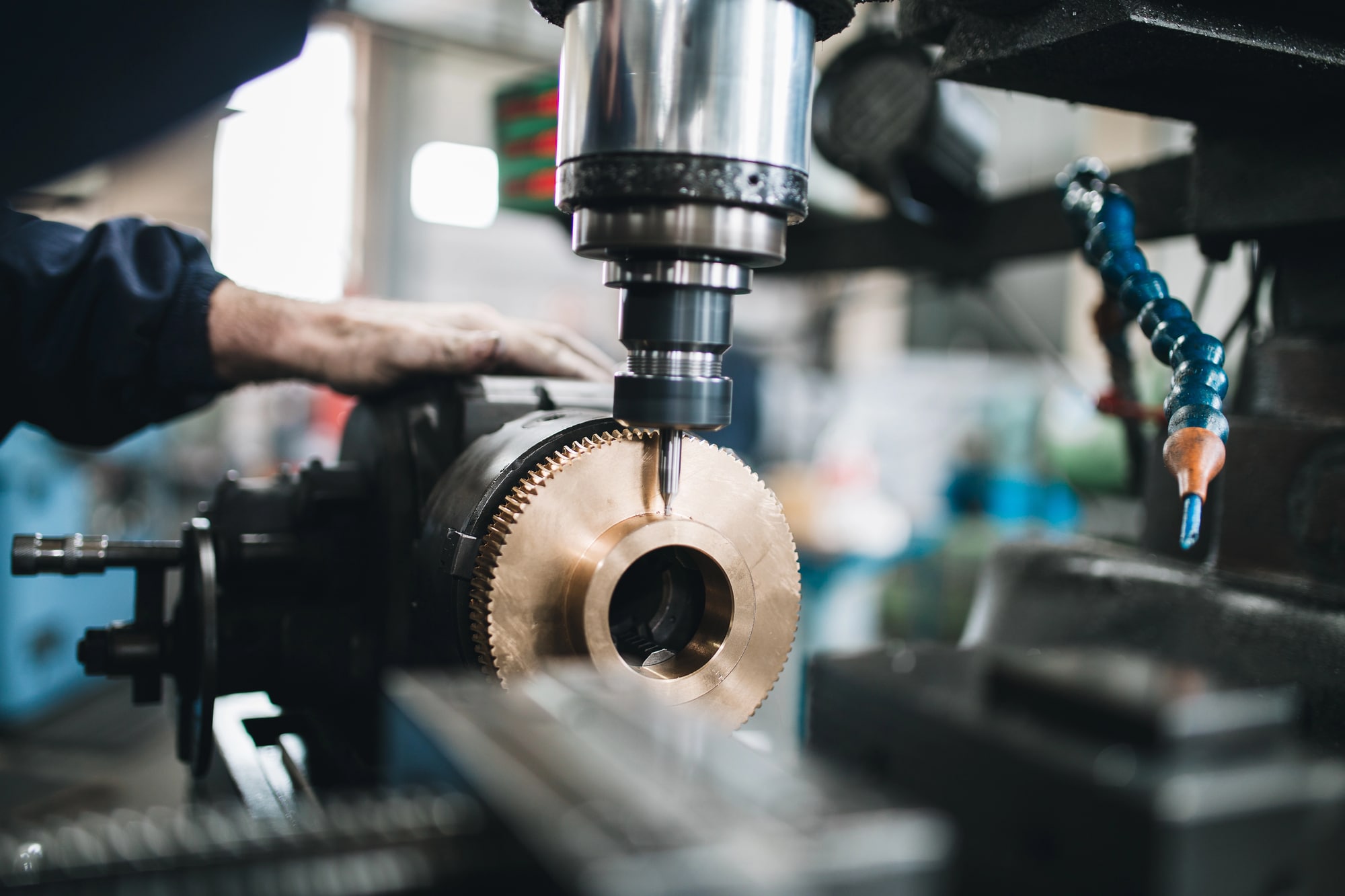
Rotary tables and indexers allow manufacturers to machine multiple faces, produce angular features, and reduce repeated setups. When these devices lose accuracy, however, the resulting errors can affect every operation that depends on angular positioning.
A rotary-axis problem may look like a programming or offset issue, but the cause can also be mechanical, geometric, electrical, or hydraulic.
Common Signs of Rotary-Axis Trouble
Rotary table and indexer problems may appear as:
- Angular features that do not match print
- Misalignment between operations performed at different index positions
- Poor repeatability after returning to the same angle
- Excessive backlash during direction changes
- Table movement after clamping
- Chatter or poor finish at certain orientations
- Unusual noise during rotation
- Slow or inconsistent clamping
- Servo or positioning alarms
- Variation between pallets or fixtures
Because these symptoms can come from several systems, accurate diagnosis is essential.
The Table Must Rotate, Locate, and Clamp Correctly
A rotary system has more than one job. It must move smoothly, reach the correct angular position, repeat that position, and remain stable under cutting load.
Wear in the worm, gear set, bearings, drive components, couplings, or clamping mechanism can affect one or more of these functions. Hydraulic pressure problems may prevent consistent clamping. Feedback or control issues may affect commanded position. Contamination or poor lubrication can accelerate mechanical wear.
The condition of the supporting surfaces also matters. A rotary table that is not level, square, or properly aligned with the machine axes can produce errors even if the indexing mechanism itself is functioning.
Fixture and Pallet Relationships Matter
Before concluding that the rotary table is defective, the entire setup should be reviewed. Fixture alignment, pallet seating, locating surfaces, clamping force, and part-loading practices can all influence the result.
When errors remain after these variables are checked, the table’s mechanical condition and geometric relationship to the machine should be measured.
Restoring Rotary Performance
Corrective work depends on what the inspection reveals. Service may include bearing replacement, drive repair, backlash correction, gear work, clamping-system repair, alignment, calibration, or restoration of worn mounting and bearing surfaces.
On machines with broader wear, rotary-axis work may need to be coordinated with way restoration, ballscrew service, laser alignment, or a complete rebuild. Repairing the table alone will not correct errors originating elsewhere in the machine.
At Precision Service Machine Tool Rebuilders, we evaluate rotary tables and indexers as part of the entire machining system. Our goal is to restore controlled movement, reliable clamping, and accurate relationships between the rotary device and the machine axes.
If angular errors, inconsistent indexing, or rotary-axis alarms are affecting your work, contact us to schedule an evaluation.