
Overview
A manufacturer operating a large Poreba lathe and an American Pacemaker lathe approached Precision Service Machine Tool Rebuilders (PSMTR) after both assemblies began showing severe wear, operational drag, and reduced accuracy. The Poreba apron suffered from contamination, oil-delivery breakdown, gear wear, and mechanical misalignment, while the Pacemaker tailstock exhibited binding, poor quill travel, and substantial scoring on internal surfaces.
Rather than replacing these legacy components — which would have required long lead times or sourcing obsolete parts — the customer chose a full mechanical rebuild. PSMTR completed complete teardown, cleaning, grinding, scraping, system rebuilding, and operational testing. The restored assemblies returned to service with like-new motion, tightened geometry, reliable lubrication, and extended machine life at a fraction of the cost of replacement.
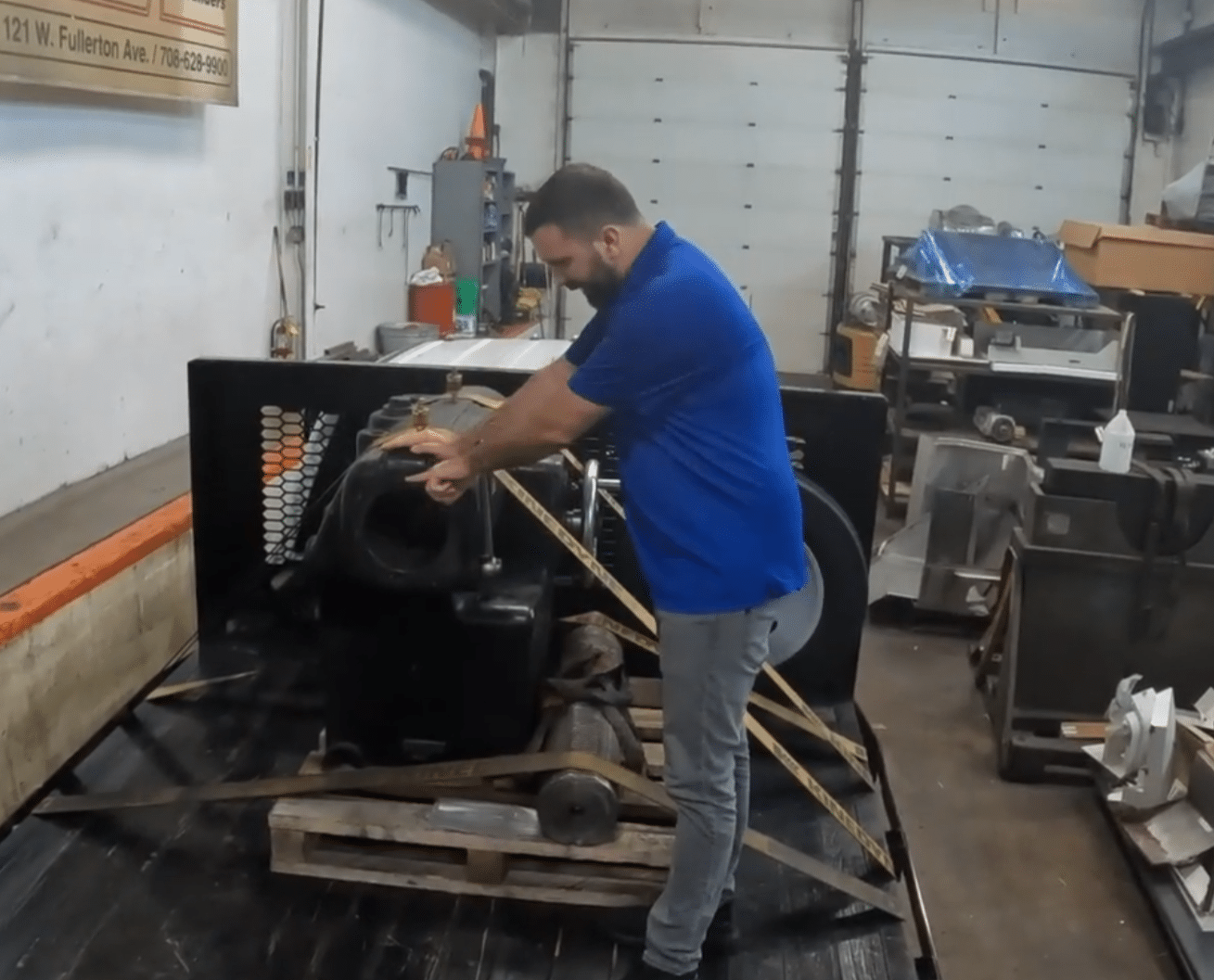
Project Background & Objectives
Poreba Apron – Operational Issues
The Poreba apron showed classic signs of long-term wear and contamination, including:
These issues led to unpredictable feed engagement, rough operation, and a growing inability to maintain consistent cutting performance.
American Pacemaker Tailstock – Operational Issues
The tailstock assembly on the Pacemaker lathe exhibited:
The operator reported difficulty holding concentricity and maintaining finish quality, especially during heavy turning and support operations.
Objectives
The customer needed both assemblies restored to:
PSMTR was selected based on its proven capability in apron rebuilds, tailstock refurbishment, scraping, and precision alignment on heavy-duty industrial lathes.
Rebuild Process
- Disassembly & Initial Condition Assessment
- Deep Cleaning, Degreasing & Surface Prep
- Machining, Grinding & Geometry Correction
- Hand Scraping & Contact Restoration
- Component Refurbishment & Lubrication System Renewal
- Final Fitment, Alignment & Functional Testing
PSMTR began by fully disassembling both assemblies down to bare castings.
For the Poreba apron:
- gears, shafts, clutches, pumps, and feed components were removed
- sludge, hardened oil, and debris were cleared
- internal cast surfaces were inspected for wear patterns
- lubrication passages were evaluated for blockages or damage
For the Pacemaker tailstock:
- the quill, screw assembly, handwheel, and internal mechanisms were removed
- the quill bore and quill OD were checked for scoring and taper wear
- sliding surfaces on the base and bottom ways were evaluated
- alignment measurements were taken to determine drift from centerline
These inspections established clear repair paths and the corrective machining required.
Both assemblies underwent aggressive cleaning to prepare them for precision work:
- stripping of old paint, dried oil, and heavy contamination
- flushing of internal oil channels
- removal of rust and corrosion
- restoring metal surfaces to bare, inspectable condition
With clean, stable surfaces, PSMTR could proceed with machining, scraping, and component refurbishment.
Poreba Apron
- mating surfaces were trued to restore proper registration
- worn shaft bores were machined or sleeved as needed
- gear faces and clutch surfaces were cleaned and corrected
- pump mounting areas were trued to restore reliable oil delivery
Precision machining ensured that rotating and sliding components operated smoothly with minimal clearance variation.
Pacemaker Tailstock
- the quill bore was lightly machined/honed to remove scoring and restore roundness
- the quill was polished and refitted for correct clearance
- base-to-way surfaces were checked and corrected to ensure proper alignment
- bottom ways were cleaned, corrected, and prepped for final scraping
This machining restored the foundational geometry needed for accurate alignment.
Scraping was performed to ensure proper accuracy and contact patterns.
On the tailstock:
- the bottom was scraped to re-establish correct contact with the bed
- the centerline was carefully re-aligned relative to the headstock
- uniform bearing points were established across the full length
- oil pockets were formed to maintain proper lubrication during heavy loading
On the apron:
- sliding and mating surfaces were scraped to improve contact and movement consistency
- critical fits were refined to ensure predictability under load
Scraping ensured smooth operation, accurate alignment, and long-term wear resistance.
Poreba Apron
The apron’s oiling system received a full restoration:
- pump was rebuilt and tested
- oil galleries were flushed and cleared
- metering points and lines were renewed
- new seals and bushings were installed
Rebuilt shafts, gears, and clutches were reinstalled, ensuring clean, reliable feed and threading operation.
Pacemaker Tailstock
- the screw assembly and handwheel mechanism were rebuilt
- lubrication points were restored or replaced
- all plugs, wipers, and seals were renewed
- internal surfaces were coated for corrosion resistance
This work eliminated drag, improved feel, and ensured predictable quill motion.
Once reassembled, both units underwent a complete functional evaluation.
For the Poreba apron:
- feed and rapid functions were tested
- clutch engagement was checked at multiple load levels
- oil-flow verification ensured consistent delivery
- mechanical noise and vibration were analyzed
For the Pacemaker tailstock:
- quill travel was checked for smoothness and uniform resistance
- alignment was verified with test bars and indicator readings
- base movement was tested across multiple bed positions
Final results confirmed restored accuracy, geometry, and operational consistency.
Value Delivered by PSMTR
Conclusion
This Poreba apron and American Pacemaker tailstock rebuild demonstrates the value of restoring legacy machine-tool components rather than replacing them. Through careful disassembly, precision machining, detailed scraping, system renewal, and thorough testing, PSMTR returned both assemblies to near-factory performance. The customer gained improved reliability, restored accuracy, and extended equipment life — all at a fraction of the cost of acquiring replacement parts or new machines.
Disclaimer
This case study is provided for informational purposes only. Every machine’s condition and operating environment is unique. Actual results may vary. Always consult qualified professionals before making equipment decisions.
To learn more about this project, view a breakdown on our YouTube Channel.