
Overview
A major industrial fabrication facility operating large turning and milling machinery engaged Precision Service Machine Tool Rebuilders (PSMTR) to perform a complete rebuild of a high-capacity horizontal turning machine originally manufactured for heavy industrial use overseas. The client’s objective was to restore the machine to as-new precision, improve uptime, reduce scrap, extend service life, and avoid the cost and long lead time of buying new equipment.
PSMTR delivered a turnkey solution—from teardown through precision rebuild, drive and control modernization, alignment, validation, and on-site commissioning. The results included near-original tolerances, faster cycle performance, improved part quality, and a significantly lower total cost of ownership compared to replacement.
Project Background & Scope
Rebuild Process: Step-by-Step
- Initial Evaluation & Planning
- Full Disassembly & Cleaning
- Re-Machining & Component Refurbishment
- Drive & Control System Modernization
- Reassembly, Alignment & Functional Testing
- Reassembly, Alignment & Performance Verification
- Documentation & Handoff
- PSMTR began with a detailed inspection of all major components, measuring wear on slideways, ball screws, spindle assemblies, and drive systems.
- The team produced a written assessment outlining which components required replacement or reconditioning, along with a project timeline and cost estimate.
- Risk factors such as transport, downtime, and integration were reviewed with the client.
- The machine was completely disassembled: castings separated, spindle modules removed, turrets extracted, and ways exposed.
- All parts were cleaned, inspected, and measured; worn or damaged components were documented.
- PSMTR used detailed inspection reports to show the “as-received” condition versus target tolerances.
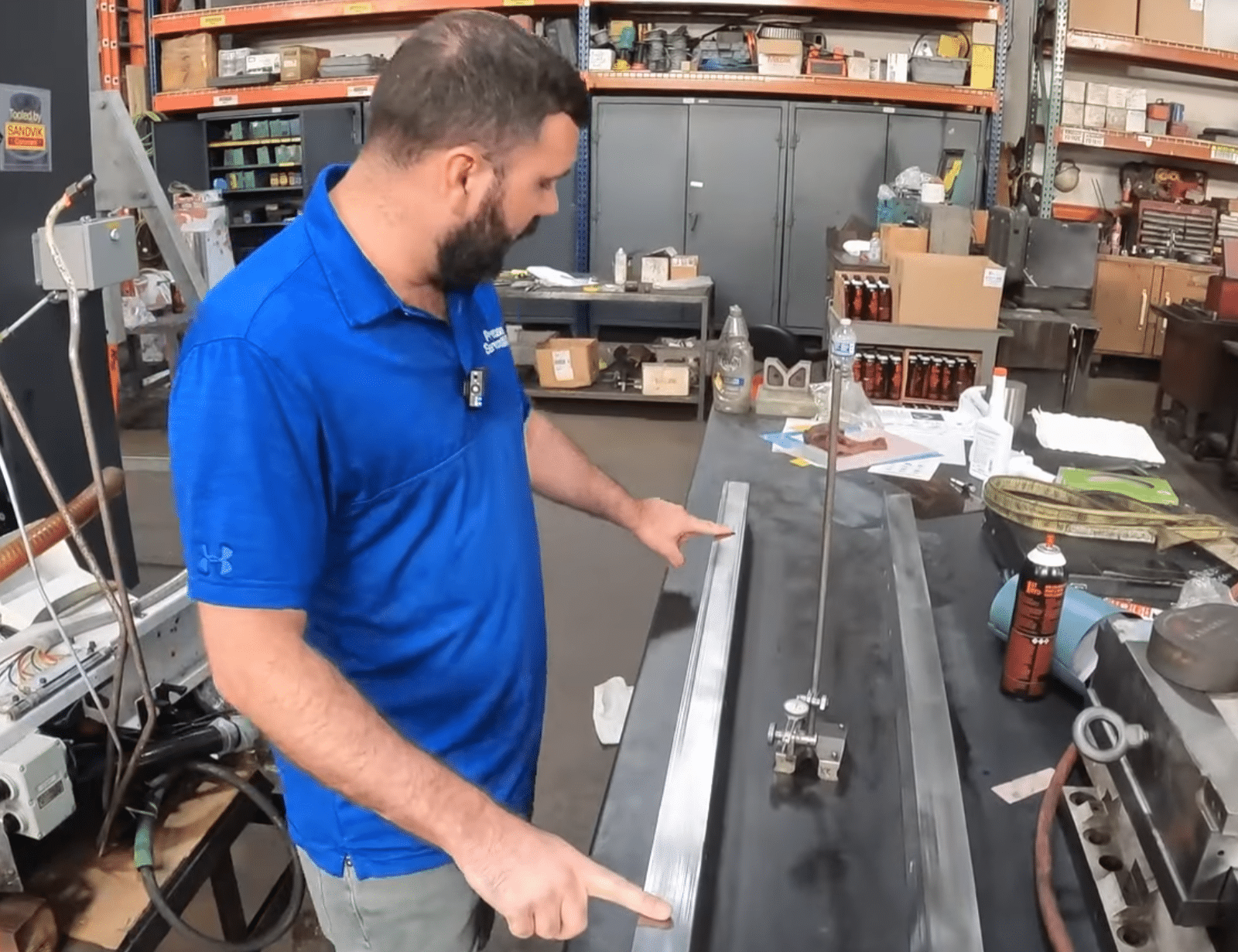
- Slideways: surfaces were re-scraped or ground to restore straightness and flatness; new way covers and seals were installed.
- Ball Screws & Linear Drives: worn screws were replaced or re-ground; nuts were adjusted to eliminate backlash.
- Spindle: old bearings removed, journals inspected, new high-precision bearings installed, runout corrected, and spindle balanced.
- Turret: indexing accuracy restored; gears, hydraulic clamps, and related components overhauled.
- Servo drives, amplifiers, and PLC controls were upgraded to a modern, easier-to-maintain platform.
- Wiring harnesses were replaced, and the operator interface was updated for improved usability.
- New encoders were installed to eliminate axis drift and enhance accuracy.
- PSMTR reassembled the machine in a controlled environment using precision fixtures.
- Axes were aligned, spindle perpendicularity was verified, and geometry was checked throughout the machine.
- Testing included axis travel verification, spindle speed testing, load simulation, thermal stability checks, and contouring tests.
- After shipment and on-site reassembly, the machine was leveled, laser-aligned, and dialed in through test cuts.
Following reassembly, PSMTR executed comprehensive alignment procedures:
- Spindle-to-table alignment
- Axis parallelism and squareness
- Machine leveling and thermal checks
- Straightness and positioning accuracy
Verification grinding tests were performed using reference components to confirm dimensional repeatability, surface finish, and stability across the machine’s operating envelope.
- PSMTR provided a full rebuild report with before-and-after measurements, replaced-component logs, and alignment certifications.
- On-site training and startup support ensured the client’s team could operate and maintain the machine effectively.
Unique Value Delivered by Precision Service Machine Tool Rebuilders
Key Outcomes
Conclusion
This project demonstrates how a comprehensive machine tool rebuild—when executed by a specialized partner such as Precision Service Machine Tool Rebuilders—can restore high-value assets to exceptional performance while dramatically reducing cost, downtime, and risk. For organizations that depend on heavy turning and milling machinery, a professional rebuild delivers a high-ROI path to extended machine life, upgraded controls, improved precision, and lower operating costs.
Disclaimer
This case study is provided for informational purposes only. The specific results achieved in this rebuild may not be indicative of what you will obtain. Each machine condition, application, and operating environment is unique; you should engage qualified service providers and conduct your own evaluation before making decisions.
To learn more about this project, view a breakdown on our YouTube Channel.