
Overview
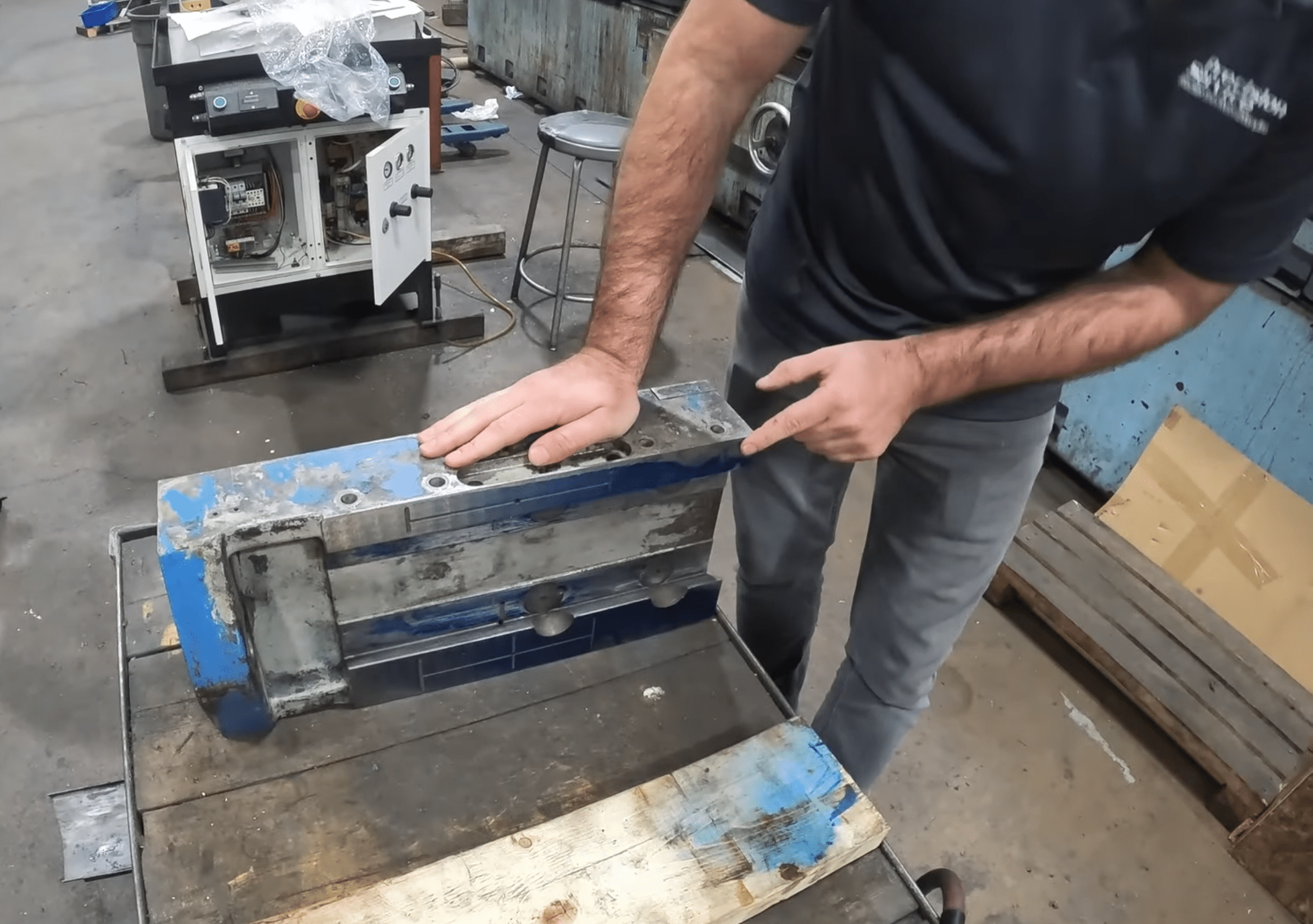
A heavy-industry manufacturer relied on Precision Service Machine Tool Rebuilders (PSMTR) to restore a massive cross-slide assembly from a large-format machining system used for precision surfacing and long-travel operations. Years of wear, lubrication breakdown, and geometric drift had reduced accuracy, increased friction, and created inconsistent cutting conditions.
Rather than replace the entire assembly—an option involving extensive capital cost and long procurement timelines—the customer chose a full mechanical rebuild. PSMTR delivered a complete restoration including precision grinding, hand scraping, lubrication-system renewal, and final geometric realignment. The rebuild returned the slide to near-factory accuracy, extended service life, and provided a significantly more cost-effective solution than replacement.
Project Background & Objectives
The customer operated a large machining system where the cross-slide is central to maintaining straightness, rigidity, and predictable tool movement during long-travel operations. Over years of heavy use, the slide exhibited:
Because cross-slides of this size are specialty components, sourcing a new assembly would have required substantial investment and extended downtime.
A rebuild offered the following goals:
PSMTR’s depth of experience with long-bed way grinding, large-slide scraping, and full-system rebuilds made them the ideal partner.
Rebuild Process
- Disassembly & Condition Assessment
- Cleaning, Degreasing & Surface Preparation
- Precision Way Grinding & Geometry Restoration
- Hand Scraping for Contact, Geometry & Oil Retention
- Lubrication-System Rebuild
- Final Fitment, Alignment & Motion Verification
PSMTR began by fully disassembling and documenting the slide assembly. This included:
- Removing covers, lubrication hardware, and accessory components
- Inspecting way surfaces for scoring, gouges, and uneven wear
- Measuring geometric drift across the slide length
- Identifying lubrication failures, plugged channels, and contamination
- Assessing the remaining structural integrity of the casting
The assessment provided a clear roadmap for the required precision machining and scraping work.
Before restoration, the entire assembly underwent:
- Intensive degreasing and rust removal
- Cleaning of threaded ports, oil passages, and bearing surfaces
- Mechanical preparation to ensure accurate fixturing for grinding
- Removal of old coatings, debris, and hardened contaminants
A clean starting point was essential for precise metrology and accurate geometry correction.
Because the slide exhibited measurable wear across its length, PSMTR performed precision way grinding to re-establish:
- Flatness of the primary bearing surfaces
- Parallelism between mating ways
- Proper relationship between sliding and stationary components
- Correction of localized low spots, wear channels, and surface transfer
Specialized long-bed grinders were used to ensure uniform accuracy across the entire span of the component.
Once grinding established the primary geometry, PSMTR applied extensive hand scraping to refine the surfaces:
- Achieving correct bearing contact percentage
- Creating consistent load distribution throughout full travel
- Applying cross-hatch patterns for optimal oil retention
- Ensuring smooth, consistent tracking under all operating conditions
This step is critical in large-slide rebuilds, where bearing contact must be balanced across large surface areas to prevent premature wear.
Addressing lubrication deficiencies was essential to preventing future wear. PSMTR:
- Reconditioned oil channels and porting
- Recut and restored oil pockets
- Ensured proper and even fluid delivery to all bearing surfaces
- Eliminated blockages and contamination sources
The rebuilt system now supports the proper oil film required for smooth, low-friction travel.
With geometry restored, the assembly was reassembled and tested:
- Verifying straightness and smooth motion across full travel
- Checking contact uniformity at multiple points along the slide
- Confirming consistent push/pull forces without tight spots
- Ensuring proper mating between the cross-slide and base ways
The restored assembly demonstrated smooth, free movement and reliable positional behavior.
Value Delivered by PSMTR
Conclusion
This project demonstrates the long-term value of rebuilding a large cross-slide assembly rather than replacing it. By restoring geometry, reconditioning lubrication systems, and applying expert hand-scraping techniques, PSMTR delivered a highly reliable and accurate sliding component at a substantially lower cost than new equipment.
For organizations experiencing lost accuracy, uneven travel, lubrication issues, or geometric wear on large machine-tool slides, a professional rebuild offers outstanding ROI, extended asset life, and renewed confidence in critical machining operations.
Disclaimer
This case study is provided for informational purposes only. Every machine’s condition, application, and operating environment is unique. Actual results may vary. Always consult qualified professionals before making equipment decisions.To learn more about this project, view a breakdown on our YouTube Channel.