
Overview
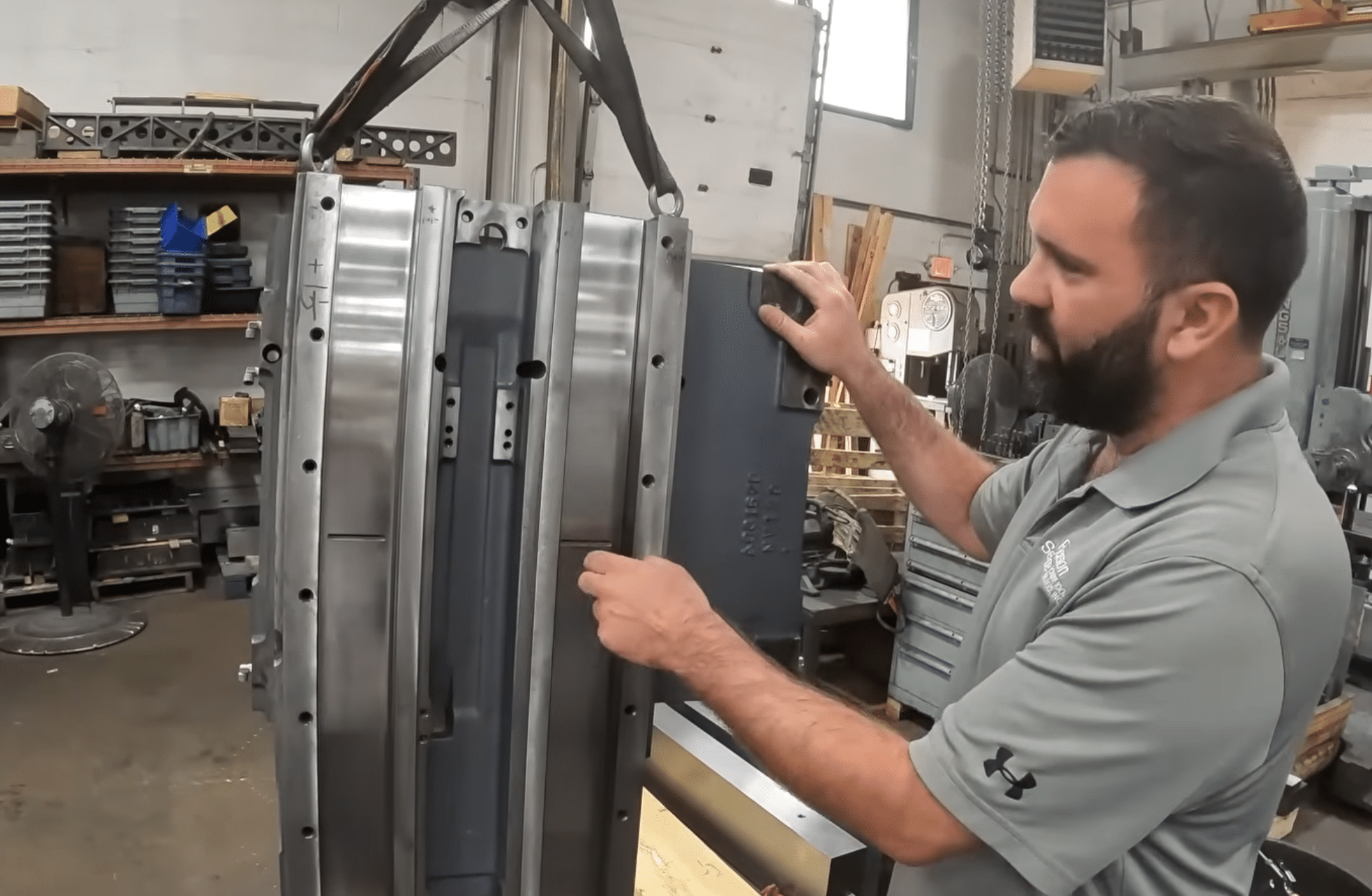
A precision turning-center operator brought in their Mori NLX 2500 after the slide assembly began showing wear, motion inconsistencies, and reduced ability to hold tight tolerances. Rather than investing in a costly replacement slide or a new machine, the customer turned to Precision Service Machine Tool Rebuilders for a complete mechanical rebuild.
PSMTR executed a comprehensive restoration that included full teardown, way-surface correction, precision grinding, hand scraping, lubrication-system renewal, and final geometric verification. The result was a slide that performed at near-factory accuracy, with smoother travel, more consistent repeatability, and a dramatically extended service life — all delivered at a fraction of the cost of replacement.
Project Background & Objectives
The Mori NLX 2500 is a high-precision turning center reliant on smooth, predictable slide movement for accuracy and part quality. Over years of operation, the customer’s slide exhibited:
Replacing the slide — or the entire machine — would have meant long lead times and substantial capital investment. A rebuild offered a faster, lower-cost path to restored performance.
Primary project goals included:
PSMTR was selected based on their proven expertise in complex slide and way-surface rebuilds.
Our Rebuild Process
- Disassembly & Condition Assessment
- Cleaning, Degreasing & Surface Preparation
- Precision Way Grinding & Geometry Restoration
- Hand Scraping for Contact, Geometry & Oil Retention
- Lubrication-System Rebuild
- Final Fitment, Alignment & Motion Verification
PSMTR began by fully removing and disassembling the slide carriage. This stage included:
- systematic removal of covers, gibs, lubrication hardware, and seals
- inspection of guide and way surfaces for wear, scoring, and fretting
- geometric analysis to identify misalignment and drift
- evaluation of lubrication channels for clogging or breakdown
- assessment of the casting’s structural integrity
This established a complete roadmap for correcting mechanical and geometric deficiencies.
To ensure accurate machining and metrology, the slide underwent:
- thorough degreasing and removal of old lubricants
- cleaning of threaded ports, oil passages, and internal channels
- removal of contamination, rust, and debris
- preparation for fixturing during way grinding and scraping
A clean base allowed precise geometry correction.
Material loss and wear across the guideways required precision grinding to re-establish:
- flat, even primary bearing surfaces
- correct parallelism between mating way surfaces
- uniform geometry across the full slide length
- removal of low spots, wear grooves, and distortion
This machining phase restored the foundational geometry that scraping would later refine.
PSMTR performed extensive scraping to bring the slide to its final precision condition. This included:
- achieving proper bearing contact percentage along the entire travel
- improving load distribution and eliminating tight or loose areas
- developing oil-retention pockets and cross-hatch surface patterns
- ensuring smooth, predictable motion under cutting loads
Scraping is essential for longevity, motion stability, and the repeatability expected of a high-end turning center.
A renewed lubrication system ensures long-term performance. PSMTR completed:
- cleaning, clearing, and reshaping oil channels
- restoring oil-pockets and porting for proper fluid delivery
- replacing or reconditioning lubrication blocks, fittings, and seals
- verifying consistent lubricant flow across all bearing surfaces
This eliminated lubrication-related wear mechanisms and restored oil-film reliability.
After mechanical restoration, the slide was reassembled and aligned in the machine. Final tasks included:
- measuring straightness and motion uniformity across full travel
- confirming proper contact patterns at multiple positions
- testing for smooth movement with consistent push/pull forces
- verifying slide-to-base relationship and overall geometry
- performing motion and accuracy checks under operational conditions
The restored slide demonstrated stable, repeatable performance exceeding its pre-rebuild condition.
Value Delivered by PSMTR
Conclusion
This rebuild of the Mori NLX 2500 slide demonstrates the substantial benefits of restoring a worn machine-tool slide rather than replacing it. Precision Service Machine Tool Rebuilders delivered renewed geometry, improved lubrication performance, smoother motion, and long-term reliability — all while avoiding the cost and disruption of new equipment.
For manufacturers facing accuracy loss, uneven travel, lubrication issues, or wear-induced performance decline, a professional slide rebuild offers exceptional ROI, stability, and confidence in daily machining operations.
Disclaimer
This case study is provided for informational purposes only. Every machine’s condition and operating environment is unique. Actual results may vary. Always consult qualified professionals before making equipment decisions. To learn more about this project, view a breakdown on our YouTube Channel.