In a manufacturing environment where precision matters, machine performance often comes down to details that are easy to overlook. One of those details is the condition of the contact surfaces within a machine. While many people focus on controls, motors, and visible wear points, hand scraping remains one of the most important techniques for restoring accuracy and improving machine performance.
At Precision Service Machine Tool Rebuilders, hand scraping is an important part of how we help customers restore worn machinery and improve machine geometry. For equipment that must perform reliably and hold tolerance, this process remains highly valuable.
What Is Hand Scraping?
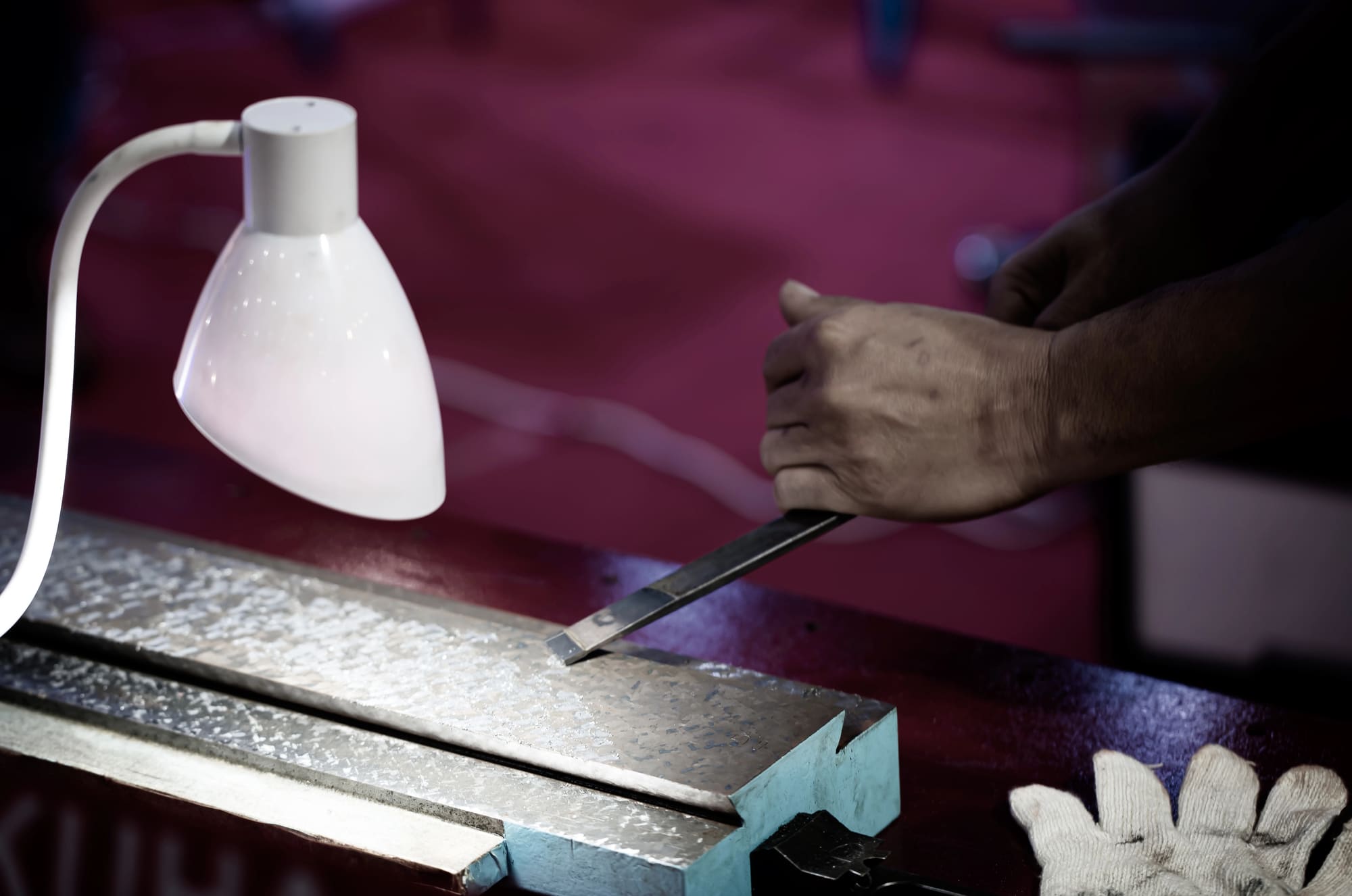
Hand scraping is a precision technique used to correct contact surfaces on machine components. It involves carefully removing very small amounts of material by hand to improve fit, flatness, bearing contact, and alignment between mating surfaces.
This is not simply a matter of smoothing a surface. The purpose is to restore controlled contact between critical machine elements so the machine can move, support load, and maintain geometry more effectively.
Why Hand Scraping Still Matters
Modern shops may assume older restoration techniques have been replaced entirely by automated methods, but hand scraping continues to serve an important role because of the level of control it provides.
When machine surfaces wear unevenly, problems can begin to affect the entire system. These may include:
- loss of accuracy
- poor repeatability
- uneven movement
- vibration or instability
- reduced surface finish quality
- accelerated wear on connected components
Hand scraping helps address these underlying conditions by improving how machine components meet and support one another.
Where Hand Scraping Is Commonly Used
Hand scraping can be important in a range of machine restoration and repair situations.
Machine ways and sliding surfaces
Sliding components depend on proper contact and movement. If those surfaces have worn over time, the machine may lose accuracy and stability. Hand scraping can help restore the relationship between these components.
Mating surfaces in rebuild work
During a rebuild, surfaces often need to be corrected so they work together properly again. Even when larger restoration steps are taken, hand scraping may be needed to achieve the final level of fit and precision.
Alignment-related correction
Hand scraping often works together with alignment services. If machine geometry has drifted because of wear, correcting component surfaces can be an important part of achieving a more accurate overall result.
Legacy equipment restoration
Older machine tools often have strong structural value, but years of use can leave the contact surfaces worn. Hand scraping can help bring those machines back into more dependable condition rather than forcing premature replacement.
Benefits of Hand Scraping for Machine Components
Improved bearing contact
A component that has proper contact will carry loads more evenly and operate more predictably.
Better accuracy
Machine components that fit together correctly are better able to maintain the geometry needed for consistent results.
Smoother movement
Hand scraping can help improve the quality of travel between components, especially where wear has created drag or instability.
Support for longer equipment life
When surfaces are corrected and supported properly, the machine often experiences less unnecessary stress and wear over time.
Stronger rebuild results
A rebuild is only as good as the precision behind it. Hand scraping helps support the final quality of restoration work.
Why It Connects to Precision Service MTR’s Capabilities
At Precision Service MTR, hand scraping is not viewed as an isolated process. It connects directly to the larger goal of restoring machine precision, improving alignment, and helping customers extend the useful life of their equipment.
That is why it fits naturally alongside services such as:
- rebuilds
- laser alignment
- preventative maintenance
- precision surface and slideway grinding
- on-site service when machine condition needs to be evaluated in the field
In many cases, hand scraping is one of the finishing precision services that helps restore a machine’s true mechanical integrity.
When to Consider Hand Scraping
A manufacturer may want to evaluate hand scraping when:
- machine accuracy has declined
- wear is affecting movement or contact surfaces
- a rebuild is already planned
- alignment issues seem tied to worn mating surfaces
- the machine no longer feels stable under load
- long-term performance has become inconsistent
These are often signs that the issue is not just operational. It may be rooted in the condition of the machine’s physical contact points.
Precision Service MTR’s Perspective
At Precision Service Machine Tool Rebuilders, we understand that restoring precision often requires more than replacing parts. It requires careful attention to how machine components actually fit, move, and support each other.
Hand scraping remains important because it addresses those details directly. For manufacturers who depend on accurate, reliable equipment, it is one of the most practical ways to restore performance where wear has affected the machine at its foundation.