
Overview
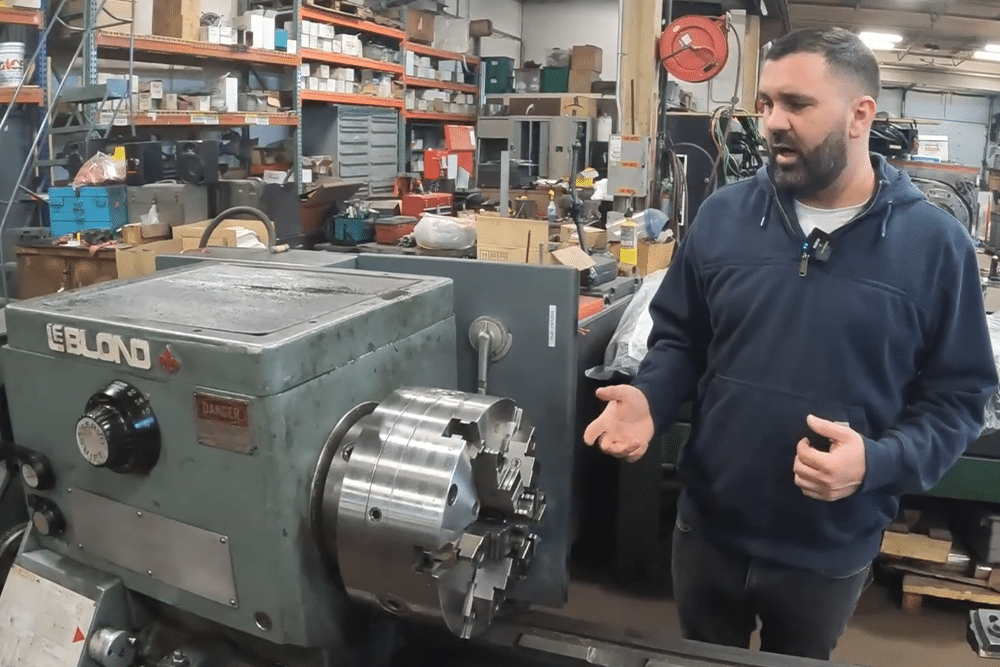
A customer brought a LeBlond lathe to Precision Service Machine Tool Rebuilders after experiencing operational problems that required professional diagnosis. While many lathe issues can be mechanical in nature, this project required a careful evaluation to determine whether the problem was related to the machine’s mechanical systems, electrical controls, or both.
After receiving the machine and performing an initial power-up inspection, our team identified an electrical issue involving blown fuses. Rather than moving forward with unnecessary mechanical repair work, Precision Service Machine Tool Rebuilders focused on isolating the fault, communicating the findings clearly, and helping the customer understand the proper next steps for repair.
This project highlights the value of experienced machine tool troubleshooting. By separating mechanical concerns from electrical faults, PSMTR helped the customer avoid misdiagnosis, reduce unnecessary repair costs, and move toward a more accurate solution.
Project Background & Objectives
LeBlond lathes are dependable machines, but like any legacy machine tool, they can develop problems that are not always obvious at first glance. A machine may fail to start, trip power, stop unexpectedly, or behave inconsistently due to worn mechanical parts, control issues, electrical faults, or a combination of problems.
For this project, the customer needed Precision Service Machine Tool Rebuilders to evaluate the machine and determine why it was not operating properly. The main objectives were to:
Repair & Diagnostic Process
- Machine Arrival & Initial Inspection
- Controlled Power-Up Testing
- Mechanical vs. Electrical Diagnosis
- Blown Fuse Identification
- Electrical Fault Review
- Customer Communication & Next-Step Planning
Precision Service Machine Tool Rebuilders began by receiving the LeBlond lathe and confirming that it arrived safely. Before any major repair work could be planned, our team needed to evaluate the condition of the machine and understand the symptoms firsthand.
This initial inspection allowed us to review the machine’s general condition, check for obvious concerns, and prepare for a safe diagnostic process.
Once the machine was ready for evaluation, PSMTR performed a controlled power-up inspection. This step was important because electrical issues can present themselves immediately once power is applied.
Rather than assuming the lathe had a mechanical failure, our team tested the machine in a way that helped reveal whether the issue was tied to the machine’s electrical system, controls, or internal components.
One of the most important parts of this project was determining whether the problem was mechanical or electrical. A lathe that will not run properly may have issues such as:
- Motor problems
- Failed switches or controls
- Wiring faults
- Blown fuses
- Overload conditions
- Short circuits
- Mechanical binding
- Drive system resistance
- Component failure within the electrical cabinet
By approaching the issue methodically, Precision Service Machine Tool Rebuilders was able to narrow the concern and avoid unnecessary mechanical repair work.
During the diagnostic process, our team identified blown fuses as a key issue preventing the LeBlond lathe from operating correctly. A blown fuse is often a symptom of a deeper problem, not the full repair by itself.
Simply replacing a fuse without understanding why it failed can lead to repeated downtime, additional component damage, or safety concerns. PSMTR’s role was to identify the problem clearly and determine that the machine required electrical attention before additional repair work could move forward.
After identifying the blown fuse condition, Precision Service Machine Tool Rebuilders reviewed the likely electrical path and helped determine the appropriate next step. In cases like this, the fault may be tied to wiring, controls, motor circuits, contactors, overloads, or another electrical component in the machine.
Because electrical issues require proper testing and safe handling, PSMTR communicated the need for qualified electrical support as part of the repair plan. This helped ensure that the customer’s machine would be addressed correctly and safely.
Throughout the project, Precision Service Machine Tool Rebuilders kept the customer informed on what was found and what needed to happen next. This included explaining that the problem was not simply a mechanical rebuild issue, but an electrical fault that needed to be corrected before the machine could be fully evaluated or returned to service.
This guidance helped the customer make a more informed decision about scheduling the proper electrical repair work and determining whether any additional service would be needed afterward.
Value Delivered by PSMTR
Project Outcome
The LeBlond lathe repair project gave the customer a clear diagnosis and a practical path forward. Precision Service Machine Tool Rebuilders identified that the immediate problem involved blown fuses and electrical fault concerns, helping the customer avoid unnecessary mechanical repair work before the electrical issue was addressed.
By carefully inspecting the machine, powering it up under controlled conditions, and separating electrical symptoms from mechanical possibilities, PSMTR provided the customer with the information needed to move forward confidently.
Conclusion
This LeBlond lathe repair project demonstrates the importance of proper machine tool diagnostics. Not every machine problem is caused by worn mechanical components, and not every electrical symptom can be solved by simply replacing a fuse. A careful troubleshooting process is essential for identifying the true cause of downtime.
Precision Service Machine Tool Rebuilders helped the customer understand the issue, avoid unnecessary repair work, and take the correct next steps toward restoring the machine. For manufacturers dealing with lathe downtime, blown fuses, electrical faults, or uncertain machine performance, PSMTR provides the experience needed to diagnose the problem and guide the repair process correctly.
Disclaimer
This case study is provided for informational purposes only. Machine condition, repair requirements, electrical faults, operating environment, and performance outcomes vary by project. Actual results may differ. Always consult qualified machine tool rebuilding and electrical service professionals before making equipment repair or replacement decisions.