
Overview
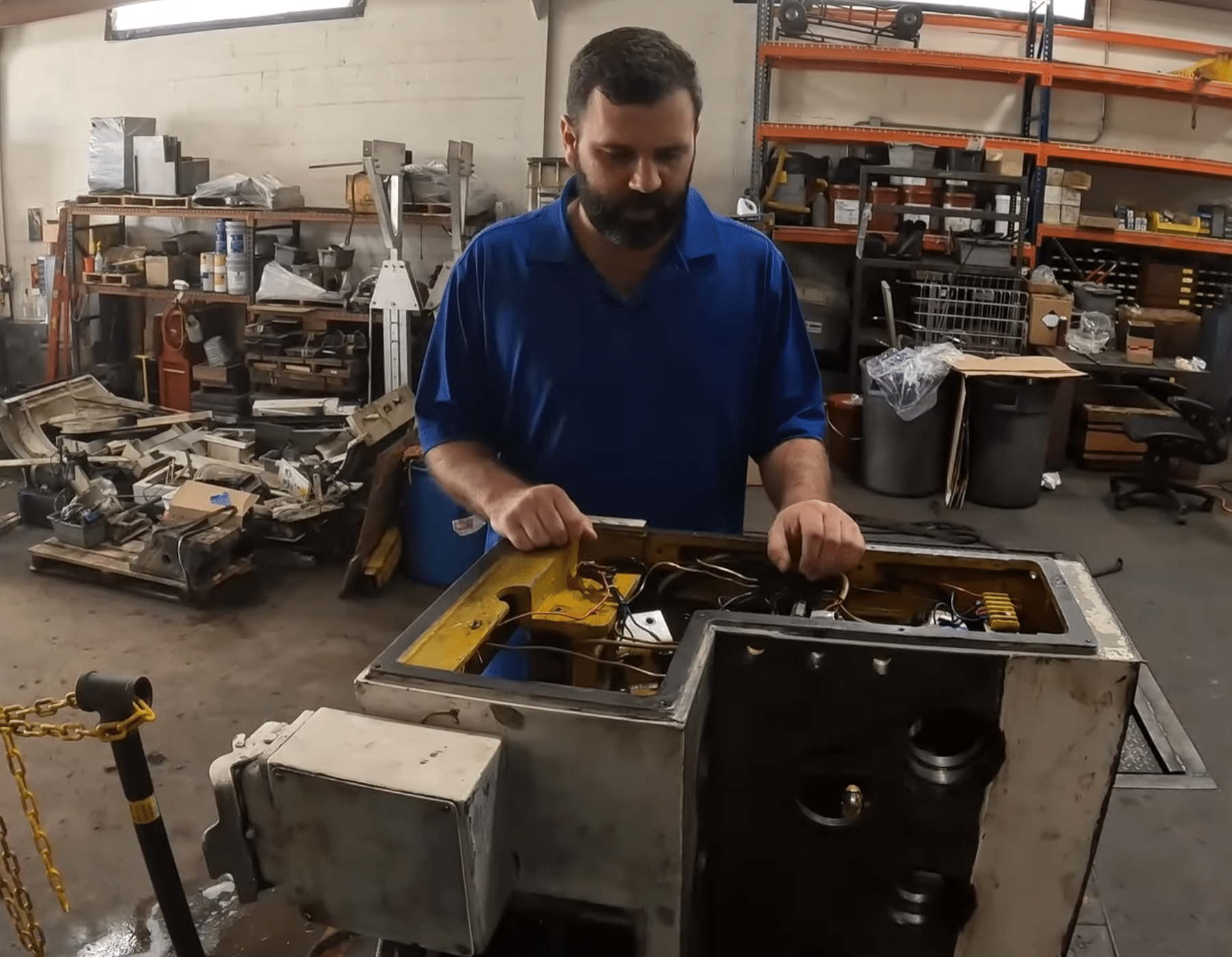
A manufacturing customer operating a Summit vertical turret lathe (VTL) relied on Precision Service Machine Tool Rebuilders (PSMTR) to diagnose and rebuild a severely compromised feed box—an essential assembly responsible for powering the machine’s threading, turning, and feed-rate operations. The feed box had developed significant internal wear due to long-term use, lubrication issues, debris infiltration, and progressive mechanical failure.
PSMTR executed a complete restoration: machining new bushings, repairing shafts and gears, refitting bearing seats, cleaning and resurfacing critical components, and reinstalling the box with proper alignment. The rebuild restored smooth feed control, eliminated mechanical noise and vibration, and extended the life of a critical legacy machine that would have been costly to replace.
Project Background & Objectives
The Summit VTL is a workhorse platform relied upon for large-diameter turning, facing, and boring operations. Its feed box is responsible for:
Over years of operation, the customer observed performance degradation such as:
Because OEM replacement units for legacy Summit VTL feed boxes are expensive and often unavailable without long lead times, a rebuild provided a more effective path to:
PSMTR’s mechanical restoration expertise, custom machining capability, and ability to reverse-engineer worn components made them an ideal partner for this project.
Rebuild Process
- Disassembly & Condition Assessment
- Cleaning, Degreasing & Surface Preparation
- Precision Machining & Component Restoration
- Reassembly & Gear Train Setup
- Machine Installation, Alignment & Run-Off Testing
PSMTR fully disassembled the feed box to expose all internal mechanical components. The teardown revealed:
- Worn and galled bronze bushings
- Scored shaft journals and damaged keyways
- Bearing bores that had lost geometric accuracy
- Misalignment between mating gear components
- Contaminated lubrication passages and accumulated debris
Comprehensive measurement and inspection of each part guided the repair plan.
The housing and all internal components underwent thorough cleaning:
- Solvent bath degreasing to remove old oil and sludge
- Clearing of clogged lubrication pathways
- Rust removal and surface preparation
- Inspection of casting integrity and internal oil channels
This ensured an accurate foundation for machining and reassembly work.
Shaft Journal Restoration
PSMTR rebuilt worn shafts using techniques such as:
- Metal spray and precision grinding to recover original diameters
- Recutting damaged keyways
- Re-establishing chamfers and fit surfaces
New Bushings & Fit Reconditioning
Custom-machined bronze bushings were produced to restore proper clearances, alignment, and rotational support.
Gear Repair & Alignment Correction
Gears were:
- Cleaned and inspected for tooth wear
- Resurfaced or replaced as needed
- Carefully matched to restored shafts to maintain correct axial spacing
Reboring and Sleeving Bearing Seats
To correct worn bores, PSMTR:
- Line-bored the housing
- Installed precision sleeves or inserts
- Ensured proper bearing fit and alignment
These repairs eliminated looseness, vibration, and erratic feed behavior.
After component restoration, the feed box was reassembled with attention to:
- Bearing preload and shaft alignment
- Correct gear mesh patterns
- Smooth rotational movement through all feed ranges
- Reliable function of selectors, detents, and engagement points
Each motion was tested to verify crisp, predictable mechanical response.
Once returned to the Summit VTL, the feed box underwent full operational testing:
- Feed rates verified under load
- Threading operations tested for synchronization and consistency
- Gear noise and vibration levels evaluated
- Lubrication flow confirmed throughout the assembly
The final run-off demonstrated significant improvements in:
- Smoothness of feed control
- Repeatability and accuracy of feed rates
- Cut quality and surface finish
- Overall machine stability and sound profile
Value Delivered by PSMTR
Conclusion
This Summit VTL feed box rebuild highlights the strong return on investment that a professional machine-tool restoration can deliver. Instead of sourcing a rare replacement assembly or purchasing a new machine, the customer regained a fully functional, reliable feed system through precision rebuilding.
For facilities relying on large VTLs, boring mills, gear-driven feed systems, and other heavy machine tools, targeted assembly rebuilds offer a cost-effective path to restored accuracy, reduced downtime, and extended equipment life.
Disclaimer
This case study is provided for informational purposes only. Every machine’s condition, operating environment, and repair requirements are unique. Actual results may vary. Always consult qualified professionals before making equipment repair or capital-investment decisions.
To learn more about this project, view a breakdown on our YouTube Channel.